How to Create an Effective Resilience Training Program for Your Employees
In today s dynamic workplace, resilience has become essential for employees to manage stress, adapt to change, and remain productive in the face of challenges.
In today’s dynamic workplace, resilience has become essential for employees to manage stress, adapt to change, and remain productive in the face of challenges. Implementing resilience training within your organization can cultivate a stronger, more adaptable team.
In this guide, we’ll walk you through the steps of creating a resilience training program that will empower your employees to thrive.
Workplace Resilience in Numbers
To fully understand the impact of resilience in the workplace, let’s look at some compelling statistics that showcase its significance for both employees and organizations:
-
Return on Investment for Mental Health Programs Organizations that invest in mental health and resilience programs see an average return of $4 for every $1 spent, due to reduced absenteeism, improved productivity, and lower healthcare costs. Source: World Health Organization
-
Improved Retention Rates Companies that invest in resilience training see retention rates improve by 45% because employees feel more supported, valued, and capable of managing workplace stressors. Higher retention not only improves team dynamics but also reduces recruitment and training costs. Source: Deloitte Insights
-
Resilience Training Improves Productivity Studies reveal that resilience programs can boost employee productivity by up to 20% as employees better manage stress, stay focused, and adapt to challenges more efficiently. This demonstrates the clear business case for resilience training, as it directly impacts organizational performance. Source: The American Psychological Association
Tune in to the Love Not Fear podcast to learn how to transform your workplace culture:
Free Tool: Join the Inner Circle Go deeper with a community of leaders committed to love-based leadership and organizational change. Learn more →
How to create your employee resilience program
1. Understand the Core Components of Resilience
Resilience involves the capacity to recover quickly from difficulties, adapting to adversity while maintaining mental well-being. Key skills often emphasized in resilience training include:
-
Emotional Regulation: The ability to manage and respond to emotional experiences.
-
Positive Outlook: Cultivating a mindset focused on opportunities and solutions.
-
Adaptability: Being open to change and able to modify approaches when needed.
-
Problem-Solving: Tackling challenges in a structured and constructive manner.
By focusing on these areas, resilience training can have a profound impact on employee mental health and productivity.
2. Start with Leadership Training
To make resilience training effective, start by equipping leaders with resilience skills themselves. Leaders who demonstrate resilience model this behavior for their teams, creating a supportive environment where resilience can thrive. Consider starting with workshops on stress management, conflict resolution, and leadership resilience.
Related post: How to Empower Your Team Through Effective Communication
3. Identify Key Training Formats
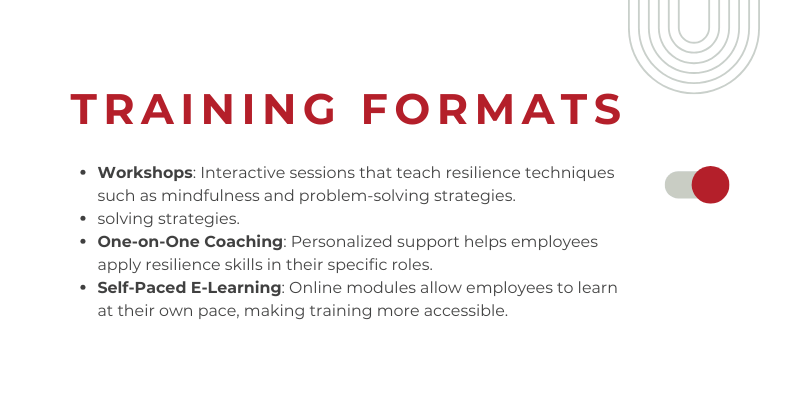
Resilience training can be provided in several formats, depending on your organization’s resources and culture:
-
Workshops: Interactive sessions that teach resilience techniques such as mindfulness and problem-solving strategies.
-
One-on-One Coaching: Personalized support helps employees apply resilience skills in their specific roles.
-
Self-Paced E-Learning: Online modules allow employees to learn at their own pace, making training more accessible.
Interactive, scenario-based learning helps employees apply what they learn to real-life situations. Integrating ongoing support and check-ins further enhances the impact of resilience training.
4. Incorporate Mindfulness Practices
Mindfulness is proven to improve mental clarity and reduce stress, helping employees remain calm under pressure.
A resilience training program that includes mindfulness exercises—like breathing techniques or guided meditation—can make a lasting impact on employee well-being. Host weekly mindfulness sessions or provide access to mindfulness apps and resources.
5. Incorporate Stress Management Techniques
Here are stress management techniques you can explore:
-
Deep breathing exercises
-
Progressive muscle relaxation
-
Time management training
-
Boundary-setting practices
Related post: How to Foster Accountability and Overcome Victim Mentality in the Workplace
6. Introduce Techniques for Managing Stress and Anxiety
Equipping employees with stress management tools is essential to resilience. Include methods like:
-
Cognitive Behavioral Techniques (CBT): Help employees manage negative thinking.
-
Time Management and Prioritization: Reduce overwhelm by teaching prioritization and delegation skills.
-
Physical Activity: Regular exercise is linked to reduced stress, so encourage physical activity as part of resilience training.
Pairing stress management training with regular check-ins can also help prevent burnout, a common challenge in high-stress environments.
7. Encourage Peer Support Networks
Peer support networks allow employees to share experiences and solutions in a safe space, reducing feelings of isolation. Building a culture of peer support can boost resilience by creating a shared sense of purpose and belonging.
Consider starting a mentorship program or organizing group activities that allow employees to support each other through shared challenges.
8. Measure and Adjust the Program Over Time
Implementing resilience training is a process that should be adjusted based on feedback and results. Measure program outcomes by tracking changes in engagement, productivity, and employee satisfaction. Use surveys, one-on-one feedback sessions, and performance metrics to determine what aspects of the training are most effective and where improvements are needed.
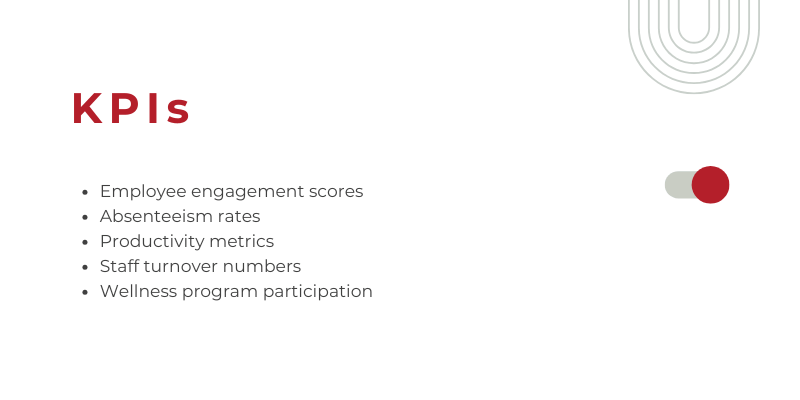
For example, you can track these key performance indicators:
-
Employee engagement scores
-
Absenteeism rates
-
Productivity metrics
-
Staff turnover numbers
-
Wellness program participation
Final thoughts
The path to building a resilient workforce requires commitment, but the benefits far outweigh the investment.
By following this comprehensive guide and utilizing available tools and resources, you can create a resilience training program that transforms your workplace culture and drives sustainable success.

Serial entrepreneur and founder of Love Not Fear, a self-leadership framework helping people make decisions from love instead of fear.
More from David →Prefer listening? The Love Not Fear podcast covers these ideas and more.
Listen to the podcast →Keep reading