How to Cultivate a Growth Mindset for Professional Success (and Get Your Team on Board)
A growth mindset—the belief that abilities and intelligence can be developed through effort, learning, and perseverance—is a cornerstone of personal and profess
A growth mindset—the belief that abilities and intelligence can be developed through effort, learning, and perseverance—is a cornerstone of personal and professional success. It empowers individuals to embrace challenges, learn from feedback, and persist in the face of setbacks. When entire teams adopt this mindset, it creates a culture of collaboration, resilience, and innovation.
In this comprehensive guide, we’ll explore practical steps to develop a growth mindset for yourself and strategies to inspire your team to embrace it.
1. Understand the Growth Mindset vs. Fixed Mindset
Before fostering a growth mindset, it’s essential to distinguish it from a fixed mindset. Here’s a breakdown:
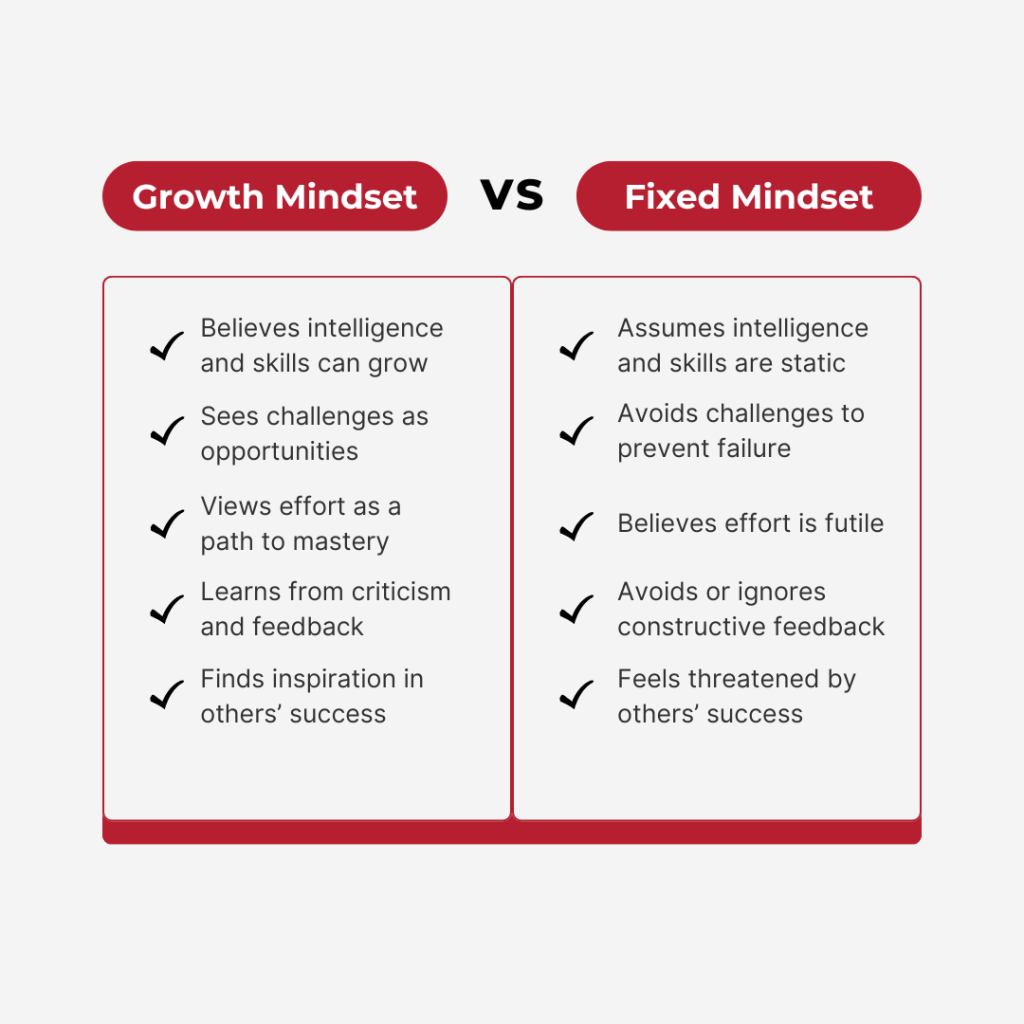
Recognizing where you and your team currently fall on this spectrum is the first step to growth. Reflect on moments where you may have adopted a fixed mindset and explore how shifting your perspective could unlock new opportunities.
Action Tip: Take time to journal instances of challenges, noting your initial reaction and how you could reframe the situation with a growth mindset.
For strategies to overcome limiting beliefs, read our article on transforming fear into opportunity.
2. Model the Growth Mindset as a Leader
As a leader, your mindset sets the tone for your team. Demonstrate growth-oriented behaviors by:
-
Sharing personal stories of learning from failures or setbacks.
-
Welcoming feedback and showing how you act on it.
-
Embracing new challenges openly and with enthusiasm.
When leaders model vulnerability and persistence, it normalizes learning through trial and error. It also establishes a safe space for employees to take risks without fear of judgment.
Action Tip: During team meetings, share a recent challenge you faced, what you learned, and how it helped you improve.
For leadership growth strategies, explore this guide on LinkedIn.
3. Create a Learning-Oriented Work Environment
A workplace that prioritizes growth opportunities over perfection inspires a growth mindset. Foster a culture where learning is continuous by:
-
Providing access to online courses, workshops, and certifications.
-
Creating a shared library of growth resources (books, articles, videos, etc.).
-
Hosting monthly “Growth Mindset Challenges,” where team members tackle a new skill or improve a specific process.
Action Tip: Start a learning initiative, such as “Skill-Share Fridays,” where team members teach each other something new.
4. Reframe Challenges and Failures
Challenges are often perceived as obstacles, but in a growth mindset culture, they’re viewed as opportunities to improve. Teach your team to:
-
Break down big challenges into smaller, manageable tasks.
-
Focus on the lessons learned from setbacks rather than the mistakes themselves.
-
Celebrate the courage to try, regardless of the outcome.
Action Tip: After any team project, conduct a “growth review” where successes and lessons learned are discussed openly.
Learn how to transform setbacks into learning moments in our post on resilience training for employees.
Free Tool: Join the Inner Circle Go deeper with a community of leaders committed to love-based leadership and organizational change. Learn more →
5. Foster Feedback as a Growth Tool
Feedback is vital for growth, but it must be delivered constructively. Shift the narrative around feedback to highlight it as a tool for learning rather than criticism:
-
Train leaders and peers on giving specific, actionable feedback.
-
Encourage employees to actively seek feedback to improve.
-
Acknowledge when feedback is implemented successfully to reinforce its value.
Action Tip: Establish a “Feedback Friday” routine where employees and leaders exchange feedback in a safe and supportive manner.
6. Encourage Peer Learning and Collaboration
Collaboration fosters the exchange of ideas and skills, helping team members learn from one another. By encouraging peer mentorship and group problem-solving, you create an environment where knowledge-sharing thrives.
Ways to encourage peer learning include:
-
Pairing team members with complementary skills for collaborative projects.
-
Organizing mentorship programs where senior employees guide newer team members.
-
Hosting team-building activities focused on collective problem-solving.
Dive into ways to enhance collaboration in our article on fostering empathy in the workplace.
7. Reward Effort and Persistence
Recognizing and celebrating effort—rather than just outcomes—reinforces the importance of persistence and learning. Your strategies can include:
-
Highlighting “growth moments” during meetings.
-
Offering shoutouts or small rewards for employees who tackle challenges or learn new skills.
-
Sharing stories of team members who achieved growth through perseverance.
Action Tip: Create a “Wall of Growth” in your office or on a shared virtual platform where employees can share their growth experiences.
8. Support Ongoing Development
Adopting a growth mindset is not a one-time shift—it’s a continuous process. Provide tools and resources to help employees stay on the path of learning and improvement, such as:
-
Access to coaching or professional development sessions.
-
Opportunities to attend industry events or conferences.
-
Regular team discussions focused on self-improvement and growth strategies.
For ideas on promoting lifelong learning, check out our blog on encouraging autonomy and innovation in your team.
Measuring Success: How Do You Know It’s Working?
To ensure your team is adopting a growth mindset, track metrics such as:
-
Increased employee engagement and collaboration.
-
A noticeable rise in proactive problem-solving.
-
Reduced fear of failure in tackling challenging tasks.
-
A positive shift in feedback culture.
Action Tip: Use surveys and feedback sessions to measure the team’s perception of growth opportunities and identify areas for improvement.
Final Thoughts
Cultivating a growth mindset—individually and as a team—requires consistent effort but delivers immense rewards. By modeling the mindset, creating a learning-oriented culture, celebrating effort, and supporting growth opportunities, you can unlock your team’s full potential. With a commitment to growth, challenges become stepping stones, and success becomes a shared journey.

Serial entrepreneur and founder of Love Not Fear, a self-leadership framework helping people make decisions from love instead of fear.
More from David →Prefer listening? The Love Not Fear podcast covers these ideas and more.
Listen to the podcast →Keep reading