How to Encourage Autonomy and Innovation in Your Team
In today s fast-paced business world, encouraging autonomy and innovation within your team isn t just a nice-to-have – it s essential for staying competitive an

In today’s fast-paced business world, encouraging autonomy and innovation within your team isn’t just a nice-to-have – it’s essential for staying competitive and driving growth.
But how do you create an environment where team members feel empowered to take risks, think creatively, and push boundaries?
Let’s explore some practical strategies that can help you unlock your team’s full potential.

The Power of Autonomy
Autonomy is the fuel that ignites innovation. When team members have the freedom to make decisions and choose their methods, they’re more likely to come up with creative solutions. Here’s how you can foster autonomy:
-
Delegate with trust. Give your team members ownership of their tasks. Instead of micromanaging, provide clear objectives and let them figure out the best way to achieve them.
-
Encourage decision-making. Create opportunities for team members to make decisions, even if they’re small ones. This builds confidence and decision-making skills over time.
-
Provide resources. Ensure your team has the tools, information, and support they need to work independently.
Related post: Alignment, Trust, Motivation: The Foundation of High-Performing Teams
Creating a Culture of Innovation
Innovation thrives in an environment that values creativity and isn’t afraid of failure. Here’s how to cultivate such a culture:
-
**Redefine failure. **Frame failures as learning opportunities. Encourage your team to share what they’ve learned from their mistakes.
-
Celebrate creativity. Recognize and reward innovative ideas, even if they don’t all pan out. This shows your team that thinking outside the box is valued.
-
Foster diverse thinking. Bring together people with different backgrounds and perspectives. Diversity is a powerful catalyst for innovation.
Promoting Calculated Risk-Taking
Risk-taking is crucial for innovation, but it needs to be balanced with sound judgment. Here’s how to encourage smart risk-taking:
-
Set clear guidelines. Establish a framework for assessing risks. This helps team members make informed decisions about which risks are worth taking.
-
Lead by example. Take calculated risks yourself and openly discuss your thought process. This shows your team that risk-taking is acceptable and even encouraged.
-
Provide a safety net. Create an environment where people feel safe to take risks without fear of harsh consequences if things don’t work out.
Free Tool: Join the Inner Circle Go deeper with a community of leaders committed to love-based leadership and organizational change. Learn more →
The Lifeline Exercise: A Tool for Team Connection
One powerful way to foster innovation and risk-taking is by strengthening team connections. The Lifeline Exercise, a tool we use at Love Not Fear, can help achieve this. Here’s how it works:
-
Each team member draws their personal or professional lifeline on a large piece of paper, marking significant highs and lows.
-
Team members take turns sharing their lifelines with the group, explaining the events that shaped their journey.
-
After each sharing, other team members ask questions to deepen their understanding.
This exercise builds empathy, trust, and understanding among team members, creating a foundation for open communication and creative collaboration.
Related post: The 321 Method: Deepening Team Connections Through Personal Stories
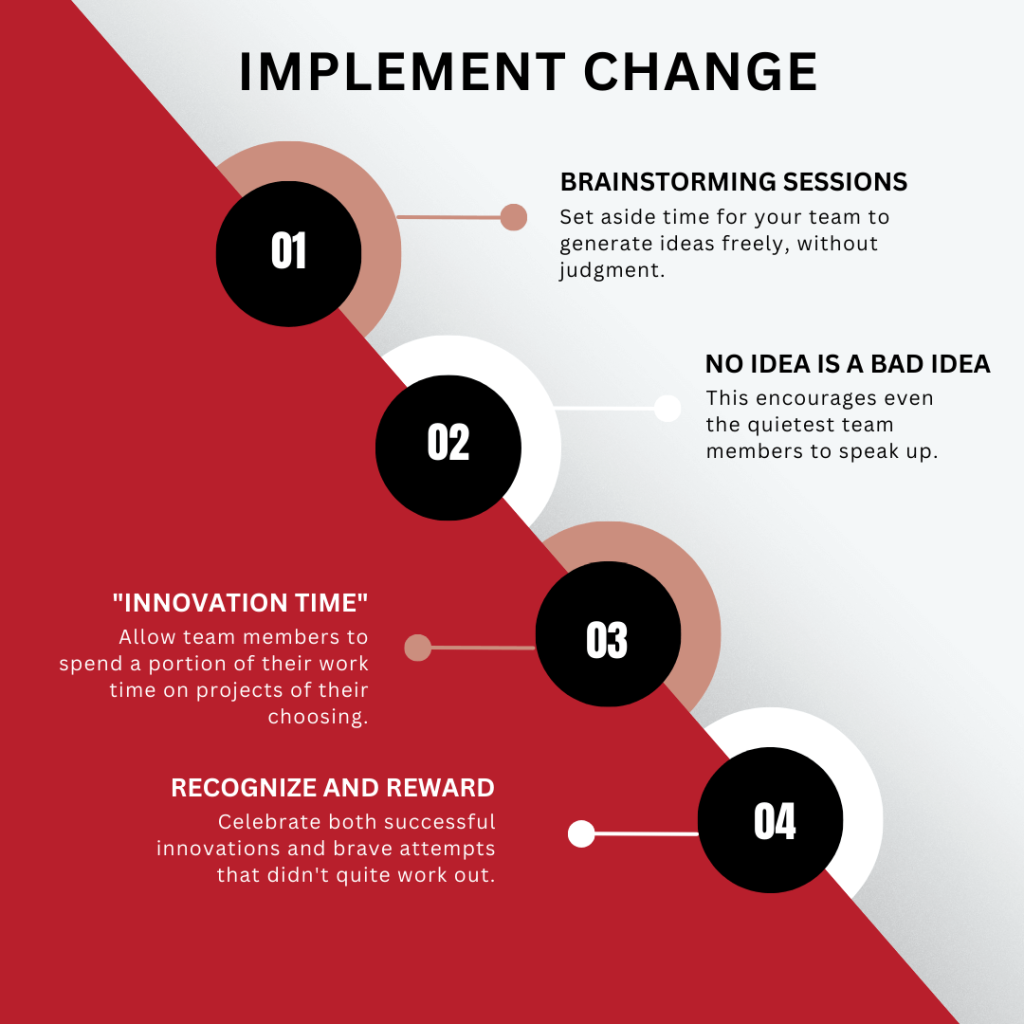
Practical Steps to Implement Change
Now that we’ve explored the principles, let’s look at some concrete steps you can take to encourage autonomy and innovation:
-
Hold regular brainstorming sessions. Set aside time for your team to generate ideas freely, without judgment.
-
**Implement a “no idea is a bad idea” policy. **This encourages even the quietest team members to speak up.
-
**Create an innovation fund. **Allocate resources specifically for experimenting with new ideas.
-
Establish “innovation time”. Allow team members to spend a portion of their work time on projects of their choosing.
-
Recognize and reward innovative efforts. Celebrate both successful innovations and brave attempts that didn’t quite work out.
Overcoming Challenges
Implementing these changes isn’t always smooth sailing. You might encounter resistance or fear. Here’s how to address common challenges:
-
**Fear of failure. **Address this head-on by openly discussing and normalizing failure as part of the innovation process.
-
**Resistance to change. **Involve your team in the process of creating new policies and practices. This builds buy-in and reduces resistance.
-
Lack of skills. Provide training and resources to help your team develop the skills they need to innovate effectively.
Remember, creating a culture of autonomy and innovation is a journey, not a destination. It requires ongoing effort, open communication, and a willingness to adapt and learn.
By implementing these strategies, you’re not just encouraging autonomy and innovation – you’re creating an environment where your team can thrive, grow, and achieve remarkable things. So take that first step today. Your team’s untapped potential is waiting to be unleashed.

Serial entrepreneur and founder of Love Not Fear, a self-leadership framework helping people make decisions from love instead of fear.
More from David →Prefer listening? The Love Not Fear podcast covers these ideas and more.
Listen to the podcast →Keep reading