How to Foster Accountability and Overcome Victim Mentality in the Workplace
In the whirlwind of today’s work environment, building a culture of accountability isn t just important—it’s the backbone of lasting success. However, many orga
In the whirlwind of today’s work environment, building a culture of accountability isn’t just important—it’s the backbone of lasting success.
However, many organizations struggle with employees who exhibit a victim mentality, blaming external factors for their failures and feeling powerless to effect change. This mindset can significantly hinder productivity, morale, and overall team performance.
In this guide, we’ll explore how to shift focus from blaming to owning work and improving outcomes, transforming your workplace into a hub of proactive problem-solving and personal growth.
Understanding the Victim Mentality
Before we dive into solutions, it’s essential to recognize the signs of a victim mentality in the workplace. Employees with this mindset often:
-
Blame others or circumstances for their mistakes or shortcomings
-
Feel powerless to change their situation
-
Resist taking initiative or responsibility
-
Frequently complain without offering solutions
-
Struggle to accept constructive feedback
This behavior not only affects the individual but can also spread throughout a team, creating a toxic work environment that stifles innovation and growth.
The Power of Accountability
Accountability is the antidote to the victim mentality. When employees take ownership of their actions and outcomes, they become empowered to drive positive change. An accountability-focused workplace fosters:
-
Increased productivity and efficiency
-
Higher job satisfaction and engagement
-
Improved problem-solving skills
-
Stronger team cohesion and trust
-
Enhanced overall performance and results
Free Tool: Join the Inner Circle Go deeper with a community of leaders committed to love-based leadership and organizational change. Learn more →
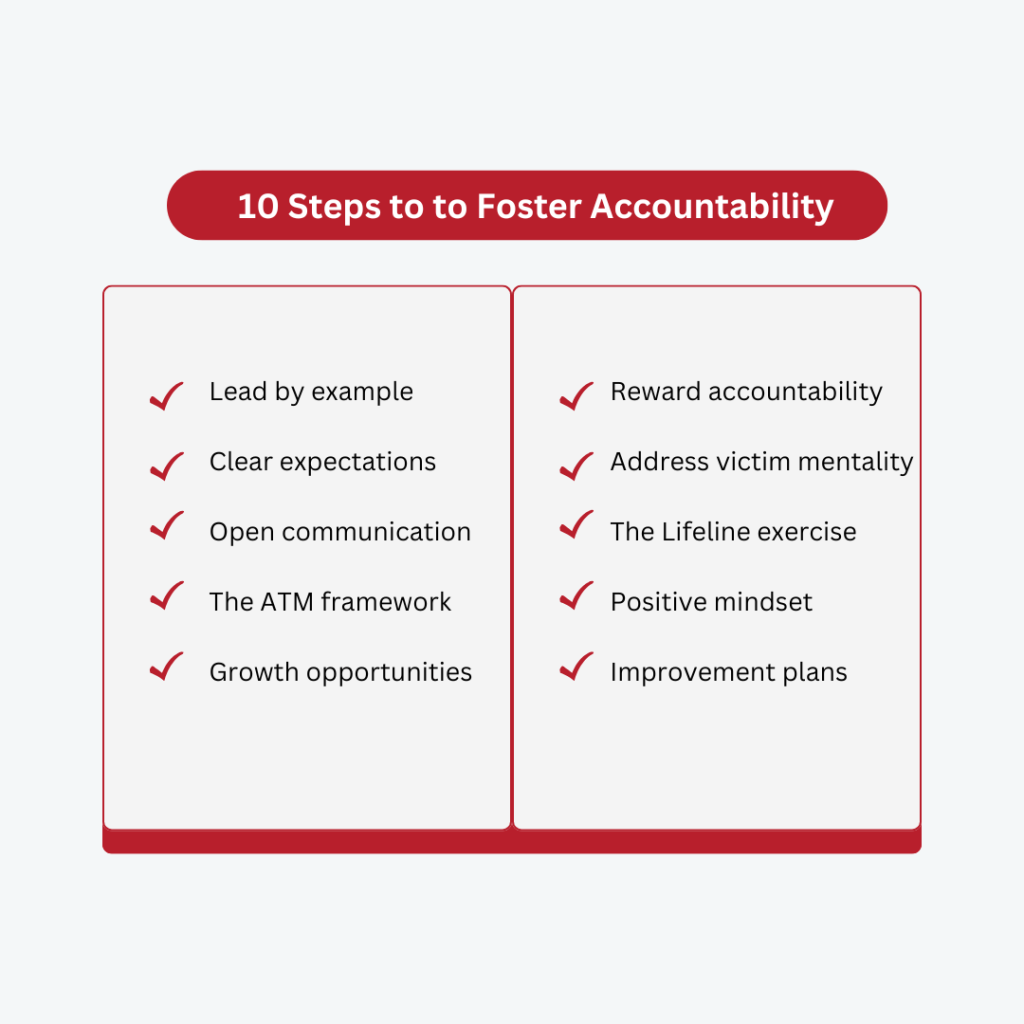
10 Practical Steps to Foster Accountability
1. Lead by Example
As a leader, your actions set the tone for the entire team. Demonstrate accountability by:
-
Admitting your own mistakes and learning from them
-
Taking responsibility for team outcomes, both positive and negative
-
Actively seeking feedback and implementing improvements
2. Establish Clear Expectations
Ambiguity can breed confusion and, ultimately, a lack of accountability. To combat this:
-
Clearly communicate roles, responsibilities, and performance standards
-
Set specific, measurable goals for individuals and teams
-
Regularly review and update expectations as needed
3. Encourage Open Communication
Create an environment where employees feel safe to express concerns and ideas. This can be achieved by:
-
Implementing regular one-on-one check-ins
-
Hosting team meetings focused on problem-solving and improvement
-
Encouraging constructive feedback at all levels of the organization
4. Implement the ATM Framework
At Love Not Fear, we use the ATM (Alignment, Trust, Motivation) framework to build high-performing teams. This approach can significantly contribute to fostering accountability:
-
Alignment: Ensure everyone understands and is committed to shared goals
-
Trust: Build psychological safety and mutual respect within the team
-
Motivation: Tap into intrinsic motivators to drive engagement and ownership
For more on building strong teams, check out our article on autonomy and innovation in teams.
5. Provide Growth Opportunities
Empower employees to take control of their professional development:
-
Offer training and skill-building workshops
-
Create mentorship programs
-
Encourage participation in cross-functional projects
6. Recognize and Reward Accountability
Positive reinforcement can be a powerful tool in shifting workplace culture:
-
Celebrate instances where employees take ownership of challenges
-
Highlight success stories of accountability leading to positive outcomes
-
Consider incorporating accountability into performance evaluations and reward systems
7. Address Victim Mentality Directly
When you notice signs of victim mentality, address them promptly and constructively:
-
Have private conversations to understand the root causes
-
Help employees identify areas where they have control
-
Work together to develop action plans for improvement
8. Utilize the Lifeline Exercise
The Lifeline Exercise is an effective tool for building team connections and fostering a sense of shared responsibility. This exercise helps team members understand each other’s backgrounds and motivations, creating empathy and reducing blame. Learn more about the Lifeline Exercise for teams.
9. Promote a Positive Workplace Mindset
A positive mindset is crucial for overcoming victim mentality and embracing accountability. Encourage employees to:
-
Focus on solutions rather than problems
-
Practice gratitude and appreciation
-
Embrace challenges as opportunities for growth
For more insights on cultivating a positive workplace mindset, read our article on positive workplace mindset.
10. Implement Performance Improvement Plans (PIPs) Collaboratively
When an employee consistently struggles with accountability, consider implementing a Performance Improvement Plan:
-
Involve the employee in setting objectives and action steps
-
Focus on specific, measurable goals
-
Provide regular check-ins and support throughout the process
Remember, the goal of a PIP is to help the employee succeed, not to punish them.
Overcoming Challenges
Shifting from a blame culture to one of accountability isn’t always easy. You may encounter resistance or setbacks along the way. Here are some tips for overcoming common challenges:
-
Be patient and persistent; cultural change takes time
-
Address resistance with empathy and open dialogue
-
Continuously reinforce the benefits of accountability for individuals and the organization
-
Provide ongoing support and resources to help employees adapt
Measuring Success
To ensure your efforts are making an impact, consider tracking the following metrics:
-
Employee engagement scores
-
Productivity levels
-
Problem resolution times
-
Team collaboration effectiveness
-
Customer satisfaction ratings
Regularly review these metrics and adjust your approach as needed.
Tune in to the Love Not Fear podcast to learn more about building great companies:
Wrapping Up
Fostering accountability and overcoming victim mentality in the workplace is a journey that requires commitment, patience, and consistent effort. By implementing these strategies and focusing on creating a positive, empowering work environment, you can transform your team into a high-performing, accountable unit that drives success for your organization.
Remember, the shift from blaming to owning work is not just about improving outcomes—it’s about creating a workplace where everyone feels empowered to contribute their best and grow both personally and professionally.

Serial entrepreneur and founder of Love Not Fear, a self-leadership framework helping people make decisions from love instead of fear.
More from David →Prefer listening? The Love Not Fear podcast covers these ideas and more.
Listen to the podcast →Keep reading