A Guide to Cultivating a Positive Workplace Mindset
Whatever you industry or team size, challenges are inevitable. But what if we could transform these obstacles into stepping stones for growth and innovation? Th

Whatever you industry or team size, challenges are inevitable. But what if we could transform these obstacles into stepping stones for growth and innovation?
This guide will show you how to cultivate a workplace mindset that not only embraces challenges but sees them as beneficial opportunities for development and success.
The Power of Positive Thinking in the Workplace
A positive mindset is more than just a feel-good concept. It’s a powerful tool that can significantly impact your team’s performance, resilience, and overall well-being. Research shows that optimistic employees are 40% more likely to get promoted and six times more likely to be highly engaged at work.
But how exactly does this positive outlook benefit your workplace?
1. Enhanced Problem-Solving Skills
When faced with challenges, a positive mindset encourages creative thinking. Instead of viewing problems as insurmountable obstacles, your team will see them as puzzles to be solved. This shift in perspective can lead to innovative solutions and breakthroughs.
2. Increased Resilience
A positive outlook helps individuals bounce back from setbacks more effectively. This resilience is crucial in today’s ever-changing business landscape, where adaptability is key to success.
3. Improved Team Dynamics
Positivity is contagious. When team members maintain a positive attitude, it fosters better communication, collaboration, and overall team cohesion. This can lead to a more supportive and productive work environment.
4. Higher Productivity and Job Satisfaction
Employees with a positive mindset tend to be more motivated and productive. They’re also more likely to find satisfaction in their work, which can lead to increased retention rates and a more stable workforce.
Strategies to Foster a Positive Workplace Mindset
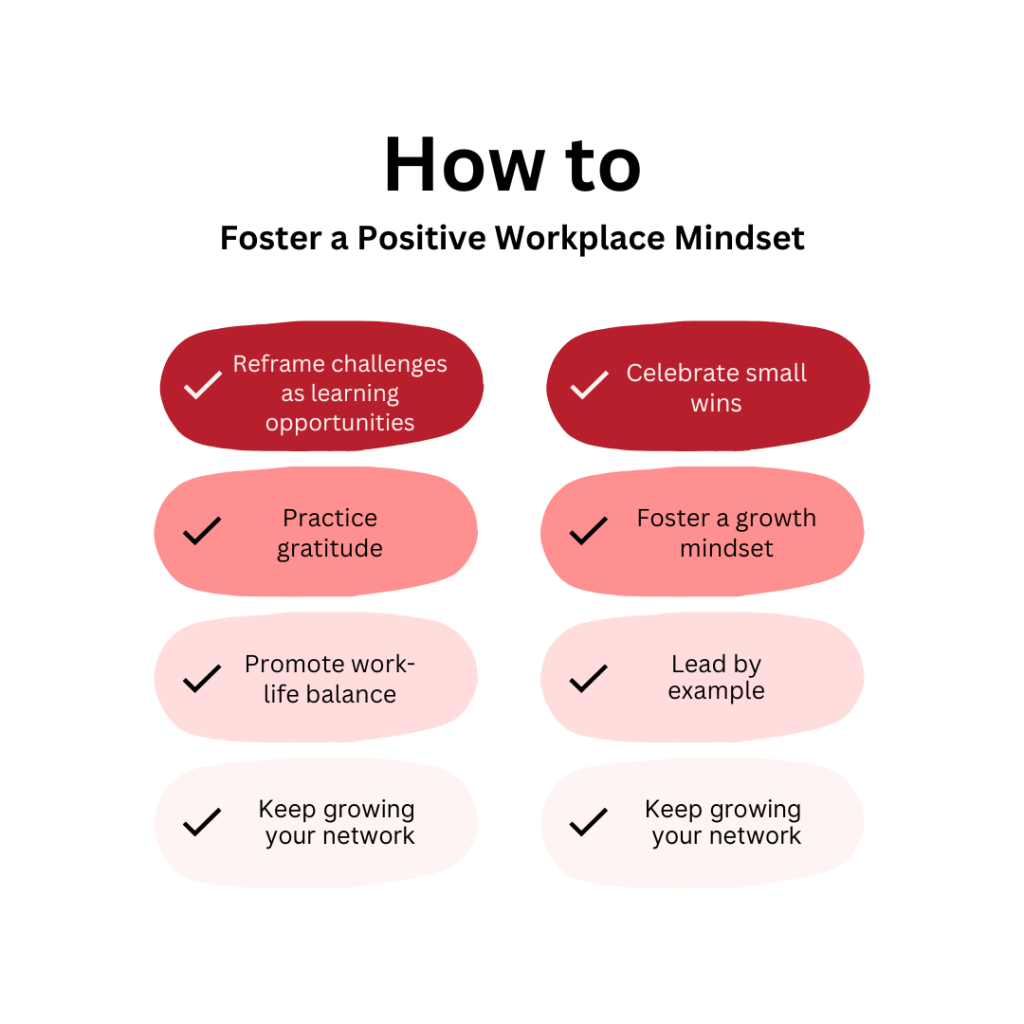
Now that we understand the benefits, let’s explore some practical strategies to cultivate this positive mindset in your workplace.
1. Reframe Challenges as Learning Opportunities
Encourage your team to view challenges not as threats, but as chances to learn and grow. This shift in perspective can transform stress into excitement and anxiety into anticipation.
For example, if a project doesn’t go as planned, instead of focusing on the failure, guide your team to reflect on what they learned from the experience and how they can apply these lessons to future projects.
2. Celebrate Small Wins
Recognition is a powerful motivator. Make it a habit to acknowledge and celebrate small victories along the way to bigger goals. This practice helps maintain motivation and focuses attention on progress rather than perfection.
Consider implementing a system where team members can share their daily or weekly wins, no matter how small. This could be as simple as a dedicated Slack channel or a few minutes set aside in team meetings for “win sharing.”
3. Practice Gratitude
Gratitude is a cornerstone of positive thinking. Encourage your team to regularly express appreciation for their colleagues, their work, and the opportunities they encounter.
You might consider starting meetings with a quick round of gratitude, where each person shares something they’re thankful for. This practice can set a positive tone for the entire meeting and beyond.
4. Foster a Growth Mindset
A growth mindset, as coined by psychologist Carol Dweck, is the belief that abilities and intelligence can be developed through effort, learning, and persistence. This mindset is crucial for seeing challenges as opportunities for growth.
Encourage your team to embrace phrases like “I can learn to do this” or “This is an opportunity to improve” when faced with difficult tasks.
5. Promote Work-Life Balance
A positive workplace mindset is easier to maintain when employees feel balanced and fulfilled in their personal lives. Encourage healthy work-life balance by respecting off-hours, promoting flexible work arrangements where possible, and providing resources for stress management and personal well-being.
6. Lead by Example
As a leader, your attitude sets the tone for the entire team. Model the positive mindset you want to see in your workplace. Share your own challenges and how you’re approaching them as learning opportunities. Your team will take cues from your behavior and attitude.
7. Implement the ATM Method
At Love Not Fear, we use the ATM (Alignment, Trust, Motivation) method to build high-performing teams. This approach focuses on aligning team goals, building trust, and fostering intrinsic motivation.
When team members are aligned, trust each other, and are internally motivated, they’re more likely to approach challenges with a positive, can-do attitude.
8. Use the Lifeline Exercise
The Lifeline Exercise is a powerful tool for fostering empathy and understanding among team members.
By sharing personal experiences and challenges, team members can build deeper connections and develop a more supportive, positive work environment. Learn how to implement the Lifeline Exercise in your team.
Free Tool: Join the Inner Circle Go deeper with a community of leaders committed to love-based leadership and organizational change. Learn more →
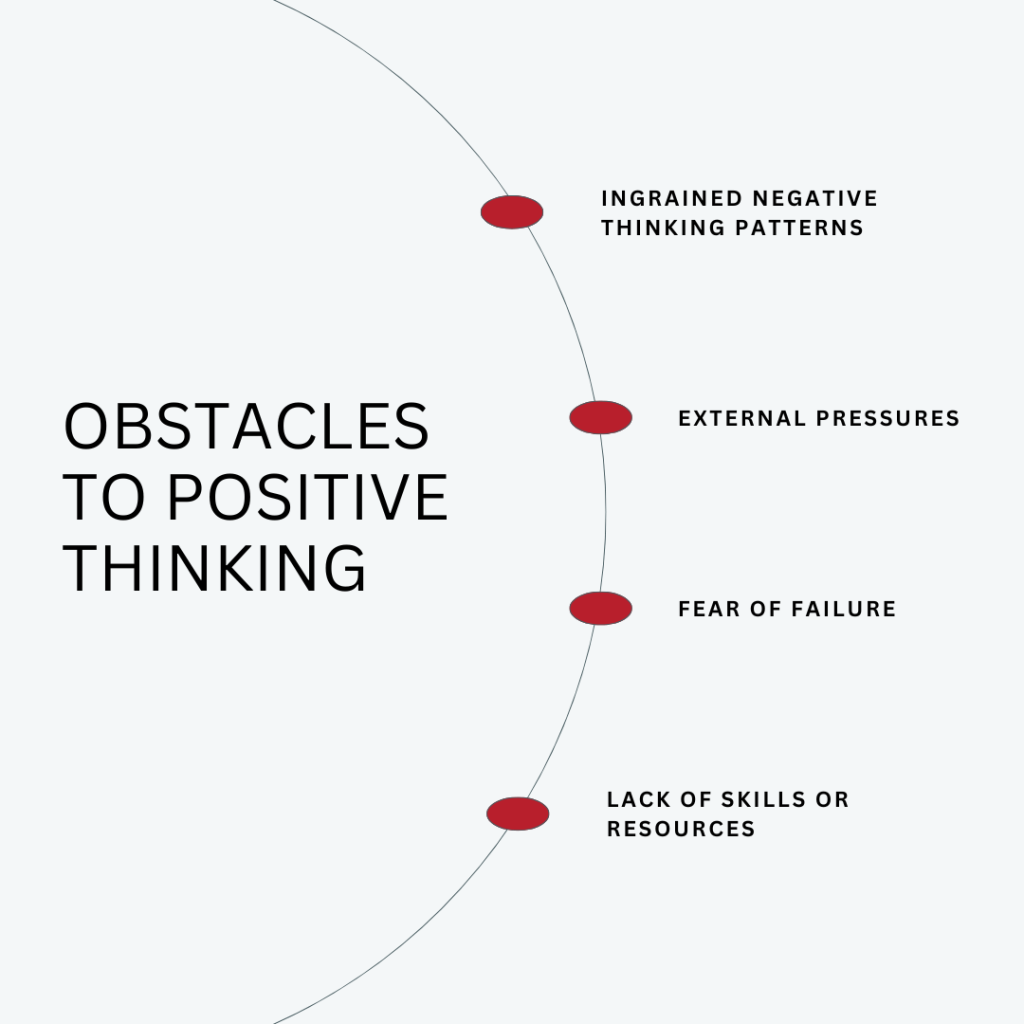
Overcoming Obstacles to Positive Thinking
While cultivating a positive workplace mindset is beneficial, it’s not always easy. Here are some common obstacles you might encounter and how to address them:
1. Ingrained Negative Thinking Patterns
Some team members may have deeply ingrained negative thinking patterns.
These can be challenging to change, but not impossible. Encourage self-awareness and provide tools for cognitive reframing. Consider offering workshops on positive psychology or mindfulness to help team members develop new thinking habits.
2. External Pressures
Sometimes, external factors like tight deadlines or difficult clients can make it hard to maintain a positive outlook. In these situations, focus on what’s within your control. Encourage your team to break large, daunting tasks into smaller, manageable steps, and to celebrate progress along the way.
3. Fear of Failure
Fear of failure can paralyze individuals and teams, preventing them from seeing challenges as opportunities. Foster a culture where failure is seen as a natural part of the learning process. Share stories of famous failures that led to eventual success to inspire and motivate your team.
4. Lack of Skills or Resources
Sometimes, challenges seem insurmountable because team members lack the necessary skills or resources. In these cases, view the situation as an opportunity for growth and development. Invest in training and provide the resources needed for your team to succeed.
Measuring the Impact of a Positive Workplace Mindset
To ensure your efforts in cultivating a positive workplace mindset are effective, it’s important to measure their impact. Here are some metrics you can track:
-
Employee Engagement Scores
-
Team Productivity Metrics
-
Employee Retention Rates
-
Customer Satisfaction Ratings
-
Number of Innovative Ideas Generated
Regularly survey your team to gauge their perception of the workplace culture and their own mindset. Use this feedback to refine your strategies and continue improving your workplace environment.
Wrapping Up
Cultivating a workplace that sees challenges as beneficial opportunities is a journey, not a destination. It requires consistent effort, patience, and a commitment to growth. But the rewards – increased resilience, improved problem-solving, enhanced team dynamics, and higher productivity – are well worth the effort.
Remember, every challenge your team faces is an opportunity to learn, grow, and innovate. By fostering a positive mindset, you’re not just solving today’s problems – you’re building a stronger, more adaptable team ready to tackle whatever the future may bring.
Are you ready to transform your workplace into a hub of positive thinking and innovation? Contact Love Not Fear today to learn more about our workshops and consulting services designed to help you build a positive, high-performing team.

Serial entrepreneur and founder of Love Not Fear, a self-leadership framework helping people make decisions from love instead of fear.
More from David →Prefer listening? The Love Not Fear podcast covers these ideas and more.
Listen to the podcast →Keep reading