Business Maturity Through a Systems Lens
Understand how organizations evolve through natural energy patterns, from startup courtship to mature harmony and potential revitalization.
The Flow of Organizational Energy
Organizations, like all living systems, follow natural energy patterns as they grow and evolve.
Rather than viewing business maturity as a linear progression, we can understand it as the dynamic interplay of energy flows, attractions, and resistances that shape an organization’s journey through different states of being.
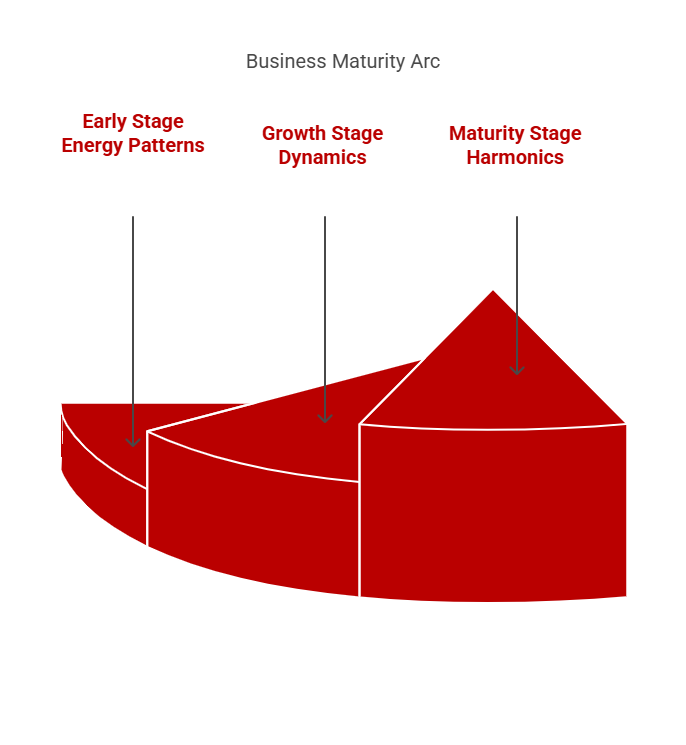
Early Stage Energy Patterns
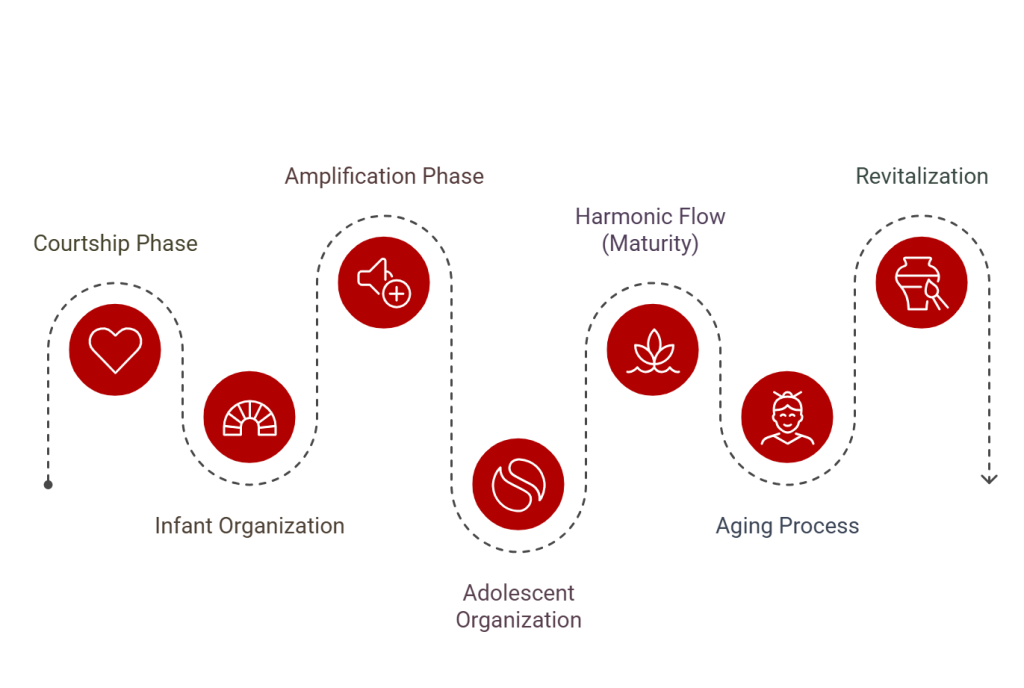
1: The Courtship Phase: Energy Gathering
In the earliest stage, we see the concentrated potential energy of ideas and possibilities. This is where entrepreneurial energy builds through:
- The magnetic pull of opportunity and possibility
- The accumulation of creative tension seeking release
- The formation of initial energetic bonds between founders and ideas
2: The Infant Organization: Energy Release
As the venture launches, potential energy converts to kinetic energy through:
- Rapid, often chaotic motion as ideas transform into action
- High-frequency oscillations between different approaches
- Intense energy expenditure with minimal systematic coordination
- Natural resistance from market forces requiring additional energy to overcome
Growth Stage Dynamics
1: The Amplification Phase: Energy Acceleration
The system begins to generate self-reinforcing energy flows:
- Multiple positive feedback loops creating acceleration
- Energy patterns becoming more organized but still highly variable
- New energy sources (revenue, talent, market presence) being incorporated
- Risk of energy dispersion through too many simultaneous directions
2: The Adolescent Organization: Energy Integration
The system faces the challenge of harmonizing different energy patterns:
- Tension between entrepreneurial and managerial energy flows
- Need to create sustainable energy circulation patterns
- Development of internal “shock absorbers” to manage energy fluctuations
- Formation of stable energy channels (processes and systems)
Maturity Stage Harmonics
1: Harmonic Flow: Peak Integration
The organization achieves a state of dynamic equilibrium:
- Balanced energy exchanges between all system components
- Efficient energy transformation from inputs to outputs
- Flexible response to external energy shifts
- Self-regenerating energy patterns that maintain vitality
2: The Aging Process: Energy Conservation
As organizations mature further, they face changing energy dynamics:
- Increased focus on preserving existing energy patterns
- Reduced energy absorption from the environment
- More rigid internal energy pathways
- Diminishing ability to transform potential energy into kinetic results
Free Tool: Join the Inner Circle Go deeper with a community of leaders committed to love-based leadership and organizational change. Learn more →
Revitalization Through Energy Pattern Shifts
Recognizing Energy Stagnation
Warning signs of problematic energy patterns include:
- Energy becoming trapped in bureaucratic eddies
- Decreased energy exchange with the external environment
- Resistance to new energy flows
- Breakdown of internal energy circulation
Restoring Vital Energy Flows
Revitalization requires:
- Opening new channels for energy exchange
- Breaking down barriers to internal energy flow
- Reestablishing connection with environmental energy sources
- Rebuilding the capacity to transform potential into kinetic energy
System Health Indicators
Restoring Vital Energy Flows
Healthy organizational systems demonstrate:
- Smooth energy transfer between components
- Balanced energy storage and expenditure
- Effective energy transformation processes
- Resilient response to energy disruptions
System Integration
Healthy organizational systems demonstrate:
- Smooth energy transfer between components
- Balanced energy storage and expenditure
- Effective energy transformation processes
- Resilient response to energy disruptions
Practical Application
Working with Natural Energy Patterns
Leaders should:
- Identify and remove energy blockages
- Create conditions for optimal energy flow
- Balance different types of organizational energy
- Maintain connection with environmental energy sources
Supporting Healthy Evolution
Focus on:
- Building sustainable energy circulation patterns
- Developing flexible energy transformation capabilities
- Maintaining vital energy exchange with the environment
- Preserving entrepreneurial energy while adding systematic coordination
This systems view of business maturity emphasizes the importance of understanding and working with natural energy patterns rather than forcing predetermined structures. Success comes from creating conditions that allow beneficial energy flows while maintaining the flexibility to adapt as the system evolves.
Key Benefits of the Exercise
01
Clarifies organizational growth patterns
02
Improves system health awareness
03
Supports adaptive leadership
04
Promotes sustainable growth
05
Guides revitalization efforts
Writer and contributor at Love Not Fear, exploring self-leadership, motivation, and values-driven living.
More from Evan →Prefer listening? The Love Not Fear podcast covers these ideas and more.
Listen to the podcast →Keep reading